
-
TUG started 32 years ago in October 1993 as a group of regular Timeshare owners just like you!
Read about our 32nd anniversary: Happy 32nd Birthday TUG! -
TUG has a YouTube Channel to produce weekly short informative videos on popular Timeshare topics!
All subscribers auto-entered to win all free TUG membership giveaways!
Visit TUG on Youtube! -
TUG has now saved timeshare owners more than $24,000,000 dollars just by finding us in time to rescind a new Timeshare purchase! A truly incredible milestone!
Read more here: TUG saves owners more than $24 Million dollars -
Wish you could meet up with other TUG members? Well look no further as this annual event has been going on for years in Orlando! How to Attend the TUG January Get-Together!
-
Now through the end of the year you can join or renew your TUG membership at the lowest price ever offered! Learn More!
-
Sign up to get the TUG Newsletter for free!
Tens of thousands of subscribing owners! A weekly recap of the best Timeshare resort reviews and the most popular topics discussed by owners! -
Our official "end my sales presentation early" T-shirts are available again! Also come with the option for a free membership extension with purchase to offset the cost!
All T-shirt options here!
You are using an out of date browser. It may not display this or other websites correctly.
You should upgrade or use an alternative browser.
You should upgrade or use an alternative browser.
Any Tuggers contracted Coronavirus? [MERGED]
- Thread starter DaveNV
- Start date


My uncle (age 92 -- the last of that generation) died of Covid-19 in a nursing home in Rochester, NY. The manager of my local grocery store died (lived in D.C.). 1500 cases in my Howard County, but no one I personally know. Schools and most workplaces went remote mid-March. Masks have been required in retail for two weeks.
Older daughter, an RN, is very careful despite limited PPE and has not gotten sick despite having had two Covid-19 patients. Younger daughter is about to start her first RN job, in cardiac critical care. She passed through the ER at our community hospital (owned by Johns Hopkins) and then was in the cardiac critical care unit at Johns Hopkins Hospital on the day it started banning visitors (3/21). Had a C-section the next day, right after they resolved the heart rhythm anomaly (pregnancy-induced). Despite Covid-19 potential exposure in both hospitals, she and baby came through fine. We're grateful for excellent care.
Older daughter, an RN, is very careful despite limited PPE and has not gotten sick despite having had two Covid-19 patients. Younger daughter is about to start her first RN job, in cardiac critical care. She passed through the ER at our community hospital (owned by Johns Hopkins) and then was in the cardiac critical care unit at Johns Hopkins Hospital on the day it started banning visitors (3/21). Had a C-section the next day, right after they resolved the heart rhythm anomaly (pregnancy-induced). Despite Covid-19 potential exposure in both hospitals, she and baby came through fine. We're grateful for excellent care.

billymach4
TUG Member
So Sorry to hear.@billymach
Sadly too many to list here in NY
Most of my circle of friends and family has been impacted in some way.
Sent from my iPhone using Tapatalk
Just today we got news of a young lady that had symptoms but could not get tested last month. Took the anti-body test this week and it was positive.

Anyone here in the land of TUG come down with the virus?
Family members have the virus?
Anyone know someone that has come down with the virus?
Anyone have family, friends, acquaintance pass away from the virus?
I had antibody test done on Tuesday. Won't know for a couple weeks when I talk to Dr. about all other tests taken at the same time.
Our friend (51 yo male, pretty good health) is a nurse in Cath lab had it in March. First test came back negative but he had all the symptoms. Next test was positive. He and family were all SIP together in house that's slightly less that 2000 sq. feet so there's not much room for distance. They have 3 "children": college grad, college junior, high school grad. He and wife still shared king bed. He was pretty sick for 2 weeks.
They thought he got it from patient. Now they're wondering if high school grad was the carrier as they look back and he was sick before that.
So far, no other members of family have shown any signs.

- Joined
- Jun 1, 2006
- Messages
- 22,797
- Reaction score
- 31,691
- Location
- Mesquite, Nevada
- Resorts Owned
- Free Agent
To bring the numbers current:
Updating the Washington State COVID-19 numbers from this thread:
March 13: 568 positive cases, 37 fatalities
March 23: 2221 positive cases, 110 fatalities
April 3: 7591 positive cases, 310 fatalities
April 13: 10538 positive cases, 516 fatalities
April 23: 12977 positive cases, 723 fatalities
May 3: 15462 positive cases, 841 fatalities
May 13: 17773 positive cases, 983 fatalities
May 23: 20065 positive cases, 1070 fatalities
June 3: 22993 positive cases, 1149 fatalities
June 13: 25834 positive cases, 1217 fatalities
This is the last time I will post Covid-19 numbers in this thread. I have tracked the numbers in my state for the last three months. And while it looks like in Washington State, the numbers seem to be winding down, nationally, it appears things may be increasing. Some states are being hit very hard right now. This is not over, and people need to stay safe. They may have reopened things in your area, but it does not mean the virus has stopped killing people. We may be better prepared to treat those infected, but the risk to your life is as great as ever. Don't let your guard down. This virus is still out to kill you.
Stay safe. Stay alive. Wearing a mask around others helps reduce the germs you may be spreading to others. Have the same courtesy for someone else that they are having for you.
Dave
Updating the Washington State COVID-19 numbers from this thread:
March 13: 568 positive cases, 37 fatalities
March 23: 2221 positive cases, 110 fatalities
April 3: 7591 positive cases, 310 fatalities
April 13: 10538 positive cases, 516 fatalities
April 23: 12977 positive cases, 723 fatalities
May 3: 15462 positive cases, 841 fatalities
May 13: 17773 positive cases, 983 fatalities
May 23: 20065 positive cases, 1070 fatalities
June 3: 22993 positive cases, 1149 fatalities
June 13: 25834 positive cases, 1217 fatalities
This is the last time I will post Covid-19 numbers in this thread. I have tracked the numbers in my state for the last three months. And while it looks like in Washington State, the numbers seem to be winding down, nationally, it appears things may be increasing. Some states are being hit very hard right now. This is not over, and people need to stay safe. They may have reopened things in your area, but it does not mean the virus has stopped killing people. We may be better prepared to treat those infected, but the risk to your life is as great as ever. Don't let your guard down. This virus is still out to kill you.
Stay safe. Stay alive. Wearing a mask around others helps reduce the germs you may be spreading to others. Have the same courtesy for someone else that they are having for you.
Dave
Beachclubmum
newbie
Well stated, Dave. Thank you.

VegasBella
TUG Member
- Joined
- Mar 7, 2013
- Messages
- 3,349
- Reaction score
- 1,070
- Location
- Vegas
- Resorts Owned
- Carlsbad Inn
Avenue Plaza
Riviera Beach & Spa
Aquamarine Villas
My sister and my brother-in-law got it. Both are recovered and didn't require hospitalization, but they are confirmed positive through testing. We are glad they are fine and hopeful there aren't any long-term consequences.
I had antibody test done on Tuesday. Won't know for a couple weeks when I talk to Dr. about all other tests taken at the same time.
Our friend (51 yo male, pretty good health) is a nurse in Cath lab had it in March. First test came back negative but he had all the symptoms. Next test was positive. He and family were all SIP together in house that's slightly less that 2000 sq. feet so there's not much room for distance. They have 3 "children": college grad, college junior, high school grad. He and wife still shared king bed. He was pretty sick for 2 weeks.
They thought he got it from patient. Now they're wondering if high school grad was the carrier as they look back and he was sick before that.
So far, no other members of family have shown any signs.
Had an evening with our nurse friend tonight. He said the morning he woke up sick was like nothing he ever had before. Headache, backache, body aches.
Said it zaps every bit of your energy.
That is consistent with the couple in this podcast:
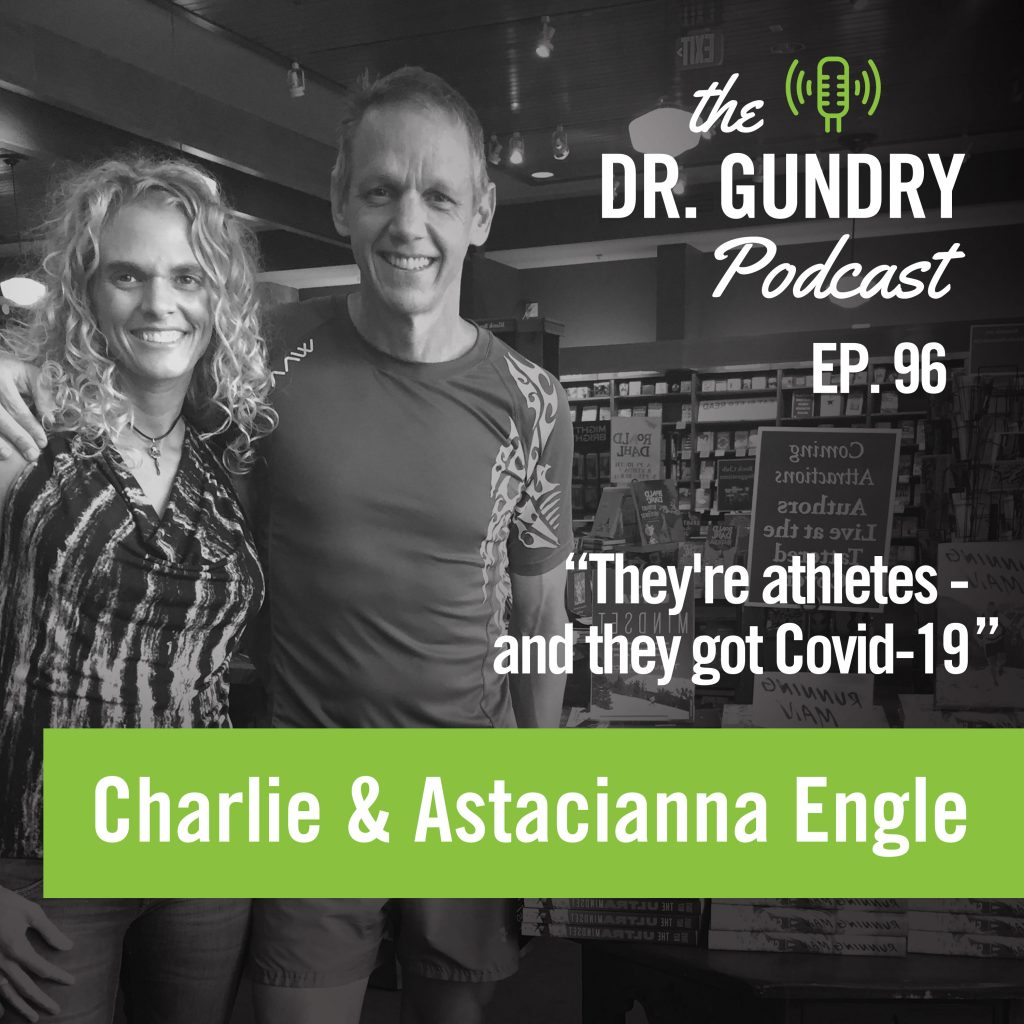
Marathoner Charlie Engle Opens Up About Contracting COVID-19
Ultra marathoner Charlie Engle & wife Astacianna Hatcher reveal their harrowing story with COVID-19 and what they're doing together to beat it.
 drgundry.com

Krteczech
TUG Member
- Joined
- Jan 27, 2008
- Messages
- 779
- Reaction score
- 941
- Location
- Colorful Colorado
- Resorts Owned
- None any more
An eye opener for me - test for antibodies. I don’t have COVID-19 antibodies in my blood. I was very sick starting March 10th, but testing was not available yet in my area. Recovery was very long and symptoms suggested COVID-19. I guess it was something else what gave me 105.5 F temp followed by terrible dry cough for weeks.

- Joined
- Jun 7, 2005
- Messages
- 15,269
- Reaction score
- 6,399
- Location
- Los Angeles
- Resorts Owned
- Westin Kierland
Sheraton Desert Oasis
An eye opener for me - test for antibodies. I don’t have COVID-19 antibodies in my blood. I was very sick starting March 10th, but testing was not available yet in my area. Recovery was very long and symptoms suggested COVID-19. I guess it was something else what gave me 105.5 F temp followed by terrible dry cough for weeks.
The antibody test isn’t perfect and not always accurate.
Sent from my iPad using Tapatalk
Krteczech
TUG Member
- Joined
- Jan 27, 2008
- Messages
- 779
- Reaction score
- 941
- Location
- Colorful Colorado
- Resorts Owned
- None any more
Ken555, that’s what I read too. The test results will not change my lifestyle. I am protecting others and myself by wearing face mask and spend a lot of time outdoors away from other humans. Unavoidable trip to grocery store once a week. Hope not to get anything unpleasant in the future. Stay healthy!The antibody test isn’t perfect and not always accurate.
Sent from my iPad using Tapatalk

- Joined
- May 20, 2006
- Messages
- 56,789
- Reaction score
- 28,470
- Location
- NE Florida
- Resorts Owned
- Marriott Grande Vista
Marriott Harbour Lake
Sheraton Vistana Villages
Club Wyndham CWA
From what I understand though, false negatives are far more rare than false positives with the antibody testing.The antibody test isn’t perfect and not always accurate.
Sent from my iPad using Tapatalk
- Joined
- Jun 7, 2005
- Messages
- 15,269
- Reaction score
- 6,399
- Location
- Los Angeles
- Resorts Owned
- Westin Kierland
Sheraton Desert Oasis
From what I understand though, false negatives are far more rare than false positives with the antibody testing.
So then you agree with my post, correct?
Sent from my iPad using Tapatalk
- Joined
- May 20, 2006
- Messages
- 56,789
- Reaction score
- 28,470
- Location
- NE Florida
- Resorts Owned
- Marriott Grande Vista
Marriott Harbour Lake
Sheraton Vistana Villages
Club Wyndham CWA
Yes, but not in the same context. @Krteczech tested negative. So more likely that they were not infected and had something else than they were infected and had a false negative test.So then you agree with my post, correct?
Sent from my iPad using Tapatalk

T_R_Oglodyte
TUG Lifetime Member
There is a very common statistical misconception that is made in circumstances such as this. I did it in a post a couple of months ago after I got tested for antibody. The point is that with a single test, it is more likely than not that the test is wrong if a positive result is obtained. Conversely, the odds that a false negative is incorrect are quite small.An eye opener for me - test for antibodies. I don’t have COVID-19 antibodies in my blood. I was very sick starting March 10th, but testing was not available yet in my area. Recovery was very long and symptoms suggested COVID-19. I guess it was something else what gave me 105.5 F temp followed by terrible dry cough for weeks.
Bear with me through some arithmetic. Let's assume testing of 100,000 people in a population where 1% of the people have been exposed and have the antibody. The test I had done (at the University of Washington virology lab) is quite sensitive and skews towards false positives rather than false negatives. So for my case assume 5% false positives and 1% false negatives. (Those are pretty good numbers, by the way.)
So 1% infected out of 100,000 people total means 1000 people have the antibody and should test positive. With a 1% false negative rate, those 1000 people generate 10 false negatives and 990 true positives.
Then there are the 99,000 people who don't have the antibody and should test negative. With 5% false positives, those people generate 4950 false positives and 94,050 true negatives. Below is table summarizing the outcomes. As indicated, the odds lie greatly against an inaccurate false negative. Whereas with a positive result, the odds are high that it is a false positive. The underlying conclusion is that one test really doesn't mean that much, particularly if the test is positive. You really need two tests that agree to be able to conclude with reasonable certainty.
The table above simply draws from an entire pool of people, whereas testing more likely to skew towards people who have had symptoms (and thus are more likely to have actually been infected). So, let's assume that limiting the population to only those who have exhibited one or more symptoms reduces the pool to 1,000 people (1% of the pool), and of those 1,000 people 25% were were infected and should test positive. Continuing to use 5% false positive and 1% false negative error rates, the chart above changes as shown below. But note that even under these conditions, the odds of a false negative are still less than 1%.
Last edited:

dsmrp
TUG Member
- Joined
- Feb 28, 2014
- Messages
- 2,535
- Reaction score
- 1,852
- Location
- MI Washington
- Resorts Owned
- Sheraton Vistana, Waikoloa Bay Club, Hyatt Pinon Pt
IIRC false negatives are more difficult to detect than false positives. How would you detect the absence of a positive?From what I understand though, false negatives are far more rare than false positives with the antibody testing.
In a test batch run, there's a positive control and negative control. The NEG control checks for false positives. Anything reacting on neg control, run is thrown out. POS control should check for false negatives. If the POS control is diminished in reaction but still positive, within range, the test run is still acceptable.
dsmrp
TUG Member
- Joined
- Feb 28, 2014
- Messages
- 2,535
- Reaction score
- 1,852
- Location
- MI Washington
- Resorts Owned
- Sheraton Vistana, Waikoloa Bay Club, Hyatt Pinon Pt
Cross reactivity of similar compounds/molecules also contribute towards false positives. Means test is less specific. Monoclonal antibody type tests are most specific.