• Welcome to the FREE TUGBBS forums! The absolute best place for owners to get help and advice about their timeshares for more than 32 years!

    Join Tens of Thousands of other owners just like you here to get any and all Timeshare questions answered 24 hours a day!
  • TUG started 32 years ago in October 1993 as a group of regular Timeshare owners just like you!

    Read about our 32nd anniversary: Happy 32nd Birthday TUG!
  • TUG has a YouTube Channel to produce weekly short informative videos on popular Timeshare topics!

    All subscribers auto-entered to win all free TUG membership giveaways!

    Visit TUG on Youtube!
  • TUG has now saved timeshare owners more than $24,000,000 dollars just by finding us in time to rescind a new Timeshare purchase! A truly incredible milestone!

    Read more here: TUG saves owners more than $24 Million dollars
  • Wish you could meet up with other TUG members? Well look no further as this annual event has been going on for years in Orlando! How to Attend the TUG January Get-Together!
  • Now through the end of the year you can join or renew your TUG membership at the lowest price ever offered! Learn More!
  • Sign up to get the TUG Newsletter for free!

    Tens of thousands of subscribing owners! A weekly recap of the best Timeshare resort reviews and the most popular topics discussed by owners!
  • Our official "end my sales presentation early" T-shirts are available again! Also come with the option for a free membership extension with purchase to offset the cost!

    All T-shirt options here!
  • A few of the most common links here on the forums for newbies and guests!

Wanted Urgently: People who know a half century-old computer language so states can process unemployment claims

I took COBOL and ASSEMBLER classes 30+ years ago(requirement for my Data Processing-Computer operations degree---Now called IT Support) I remember absolutely nothing about it. I'm still working, but of no help.:shrug::doh:
 
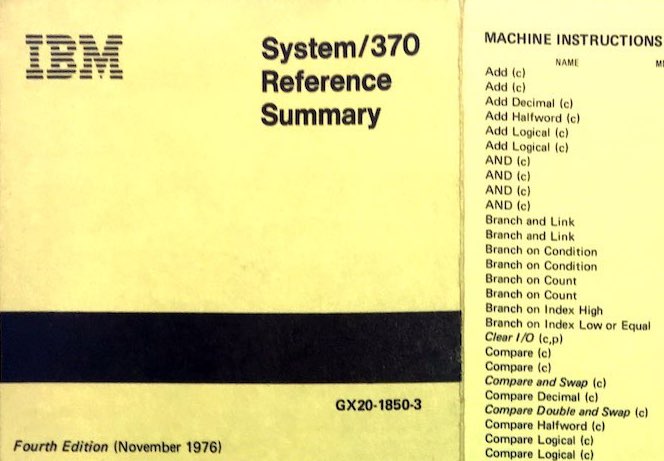
Somewhere, in the deep dark recesses of a box in my closet, I still have this:

IMG_1447.jpg
 
As I continue to dust off old memories of Assembler coding, we were always trying to find better (faster) ways to do something and do what they said could NOT be done in Assembler. I started in Operations so when I moved to programming, I always tried to push accurate and useful info to the operators so they could know why a program abended at 02:00 and whether or not it was worth calling.

This has me thinking about Dynam/T, CICS, and many other things I have not considered in a long time..
 
As I continue to dust off old memories of Assembler coding, we were always trying to find better (faster) ways to do something and do what they said could NOT be done in Assembler. I started in Operations so when I moved to programming, I always tried to push accurate and useful info to the operators so they could know why a program abended at 02:00 and whether or not it was worth calling.

This has me thinking about Dynam/T, CICS, and many other things I have not considered in a long time..

Oh boy, do I remember those 2am calls and having to make real time decision whether they were allowed to skip a batch job that went to hell. After having some experience from those early morning calls, I told them to give me 5 to 10 minutes to clear my foggy brain before deciding what to do.
 
As I continue to dust off old memories of Assembler coding, we were always trying to find better (faster) ways to do something and do what they said could NOT be done in Assembler. I started in Operations so when I moved to programming, I always tried to push accurate and useful info to the operators so they could know why a program abended at 02:00 and whether or not it was worth calling.

This has me thinking about Dynam/T, CICS, and many other things I have not considered in a long time..
The abend call in the middle of the night when payroll was running, what memories.
 
so they could know why a program abended at 02:00 and whether or not it was worth calling.
But we REALLY REALLY like to call programmers at 02:00 :LOL: ;) JK I remember working 3rd shift. Dreading having to call a programmer. Never knew who was on call, but relieved when it was certain ones because they were insanely pleasant in the wee hours of the morning.
 
Yup, this brings back very old, dusty memories. I remember in the early 70s in university using Fortran IV and Cobol in a 3rd-year Intro to Computer Science class and then sitting there in the labs doing up punch cards. Interestingly, the last time I thought about this was just last year. We were clearing out (downsizing) my home office library and I came across my old manuals and textbooks. Who knew I should have saved them?!! :shrug:
 
Last edited:
The abend call in the middle of the night when payroll was running, what memories.
I worked for the Central Bank, which oversaw the financial institutions. While my group did not have payroll and accounting, some programs were still mission / time critical and had to be completed the same night. Then even if a job could be skipped, we had to decide programs which were dependent on its completion and how many of those lines of instructions in the JCL had to be asterisked off. Good times.
 
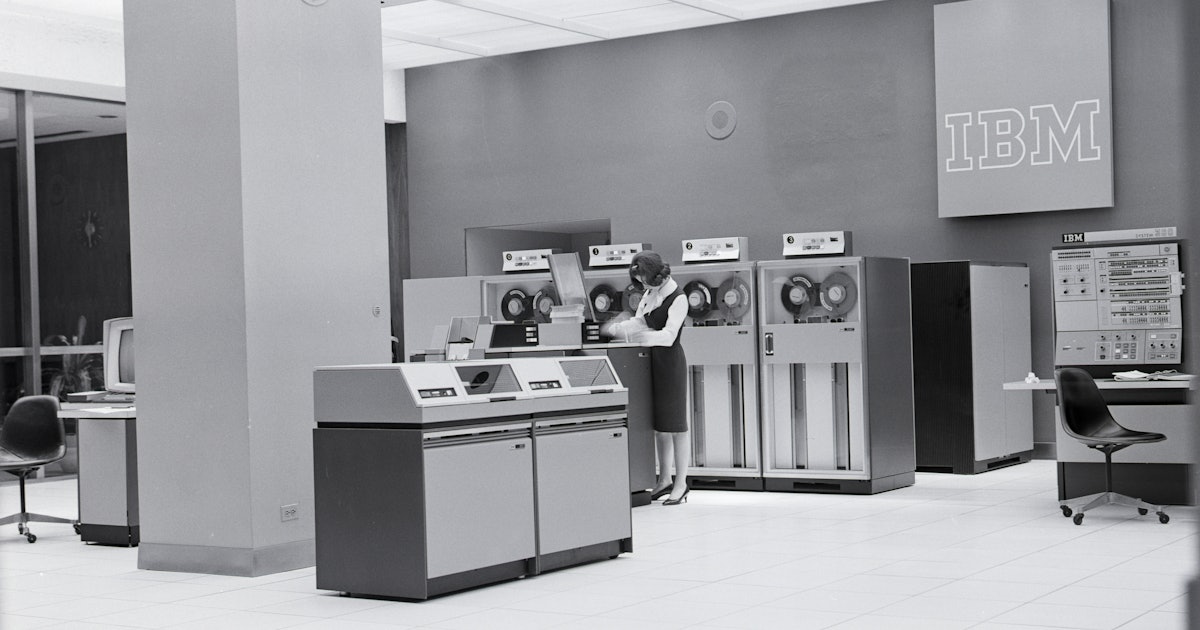
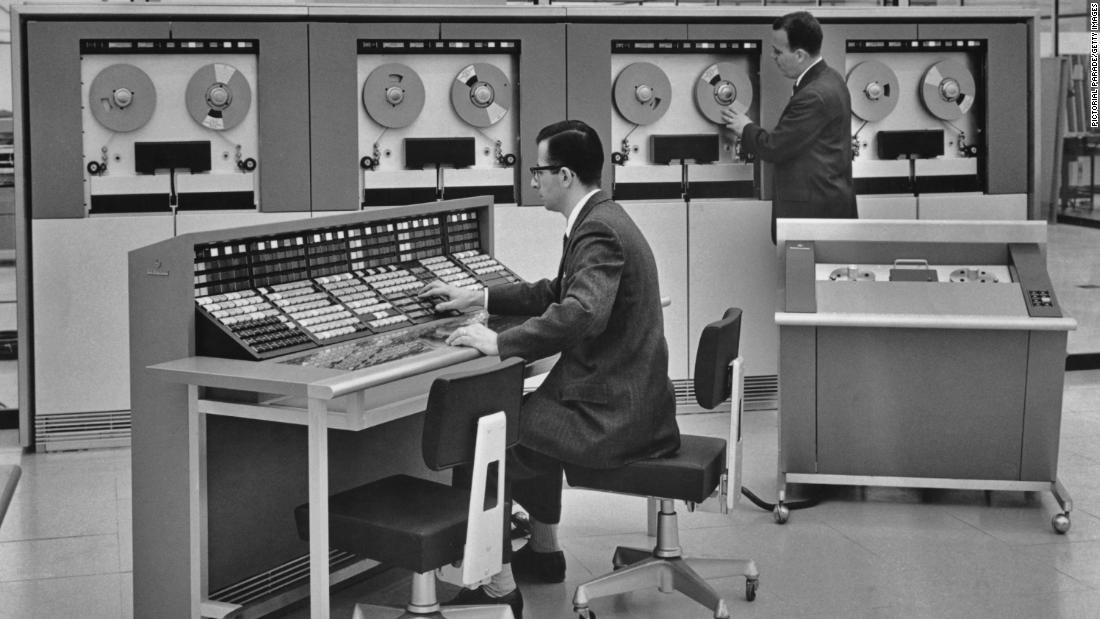
... Something fishy about this story, why use a picture of a 1960s hardware, fake news!


Sent from my iPad using Tapatalk Pro

I suspect the reason for the wrong hardware pic is because the 20-something intern assigned to find stock footage in the media archives was not even born then. Anything from the 20th century is all just ancient hardware to them and none of it looks like anything they are familiar with. o_O
 
Love it, COBOL was my first language, and I have to admit, I loved it. Sounds like we could easily put together and IT support group for whatever is needed. But who would watch the grandkids? :giggle:
 
IBM saw mainframe sales dwindling in early 2000's. They found that all the programmers were aging out so they funded education programs in China to set up a new generation of developers who could run these dinosaurs. The young developers who know JCL and these older languages are in China now.

I am not sure if this is still true today but in early 2000's, having a mainframe at the center of a Chinese business gave credibility and prestige to the business. It was akin to the desire to own fashion luxury goods as a sign that, "we made it."
 
Last edited:
Outsourced to India, actually.

I just got laid off as a COBOL programmer, March 27th. I've been doing it since 1980. The only way to get me "back in the saddle" would be a work-from-home gig - and no Agile Scrums. And the gig would have to pay well. . .
 
COBOL, a 60-year-old Computer language, is in the
COVID-19 spotlight.


.


Richard

As an warped old coder, imagine how 60 year old Java and C++ code will look in the future.

COBOL is a highly machine efficient language. It's roughly 1,000 time more efficient that Java. But it requires the programmer be able to do a lot of internal work that Java "hides". That makes it a slower language to code and test. Which is unacceptable in this day and age.
 
Also must of the UIS information is canned from the federal government computer system back in the day and states would / can only make some small changes based upon their states UIS requirements. IMHO.
 
As an warped old coder, imagine how 60 year old Java and C++ code will look in the future.

COBOL is a highly machine efficient language. It's roughly 1,000 time more efficient that Java. But it requires the programmer be able to do a lot of internal work that Java "hides". That makes it a slower language to code and test. Which is unacceptable in this day and age.
Yeah - those old languages don't consume a lot of resources. If you're a linear programmer, you're happy if the monitor in front you is blank except for a blinking cursor. If you're object-oriented, you don't know what to do when there isn't an object in front of you. But that object consumes resource.

************

side note - I go so far back that my original programming done was done with yellow punch tape when I was in high school. The punch tape was feed into a reader that converted the tape to binary, then sent the binary to the mainframe over a telephone line modem.
This looks a lot like the punch tape machine we used.
 

Attachments

  • 1586565441140.png
    1586565441140.png
    1 MB · Views: 6
Yes. I was cleaning out a closet last fall and ran across some blank punch cards. I took them into the contract I was on so all the H1Bs could actual see what a punch card was. All of them wanted a sample. . .

I have 81 bits of core memory in Lucite at home. . . Yes, the REAL core memory - ferrite cores. . .
 
IBM will offer free COBOL training to address overloaded unemployment systems.


.


Richard

You know, this makes me think of the movie Space Cowboys. Will object oriented coders be able to grasp non-orientated language concepts? It's not just a matter of learning a new syntax. It's learning an entire new (to them) methodology. (That was a major issue in the movie - people steeped in new techniques didn't grasp the old technolgy.)
 
You know, this makes me think of the movie Space Cowboys. Will object oriented coders be able to grasp non-orientated language concepts? It's not just a matter of learning a new syntax. It's learning an entire new (to them) methodology. (That was a major issue in the movie - people steeped in new techniques didn't grasp the old technolgy.)
For me it was the other way around. It took me about three months of staring at screens and trying to write code, reading references, etc., before I got the hang of object oriented. My challenge was creating smart applications in Office suite using Visual Basic, particularly Access. I had previously created interfaces in Rbase, but I couldn't get the hang of how to initiate execution in Visual Basic.

But once I figured that out, I realized that all of the linear stuff still applied during code execution. I could still create functions and subroutines as I normally did. And I figured that I was writing some pretty good routines using my linear programming training.

My hang up then, and still this day, is that I couldn't figure out where in the object model I was. For example, when I'm doing some tasks, I don't understand why I need to create an application object for the application I'm inside of. It would seem to me that if the application is open, and I'm coding inside that application, then there must parent application object that exists and that I can reference.

In linear, that realm doesn't exisit. You define your variables, you set values, and that's it. Or you create a screen, where your defined variables populate specific areas on the screen. And you read from or write to your data file as needed.

 
Wanted Urgently: People who know a half
century-old computer language so states can process unemployment claims.


Richard
Yes I am *that* old. I logged many years coding thousands of lines of COBOL code for defense and manufacturing. I started my corporate IT career with punched cards back in the day...where you hoped they were in the right order and that you didn't drop the tray, turnaround time was best case 24 hours to find out if there was any typo that caused your job to abend. And all those 2am phone calls where you had to drive into the office to fix a JCL syntax error because the batch job failed. Those were the days. I don't think you could pay me enough to go back.
 
Did IBM have a machine called 024 or 026 to generate punch cards,?
 
Top