• Welcome to the FREE TUGBBS forums! The absolute best place for owners to get help and advice about their timeshares for more than 32 years!

    Join Tens of Thousands of other owners just like you here to get any and all Timeshare questions answered 24 hours a day!
  • TUG started 32 years ago in October 1993 as a group of regular Timeshare owners just like you!

    Read about our 32nd anniversary: Happy 32nd Birthday TUG!
  • TUG has a YouTube Channel to produce weekly short informative videos on popular Timeshare topics!

    All subscribers auto-entered to win all free TUG membership giveaways!

    Visit TUG on Youtube!
  • TUG has now saved timeshare owners more than $24,000,000 dollars just by finding us in time to rescind a new Timeshare purchase! A truly incredible milestone!

    Read more here: TUG saves owners more than $24 Million dollars
  • Wish you could meet up with other TUG members? Well look no further as this annual event has been going on for years in Orlando! How to Attend the TUG January Get-Together!
  • Now through the end of the year you can join or renew your TUG membership at the lowest price ever offered! Learn More!
  • Sign up to get the TUG Newsletter for free!

    Tens of thousands of subscribing owners! A weekly recap of the best Timeshare resort reviews and the most popular topics discussed by owners!
  • Our official "end my sales presentation early" T-shirts are available again! Also come with the option for a free membership extension with purchase to offset the cost!

    All T-shirt options here!
  • A few of the most common links here on the forums for newbies and guests!

Expiration Dates Are Meaningless

T_R_Oglodyte

TUG Lifetime Member
Joined
Jun 6, 2005
Messages
17,431
Reaction score
9,691
Location
Mucky Toe, WA
With the exception of infant formula, where they really do refer to expiration, dates generally represent a manufacturer’s best estimate of how long food is optimally fresh and tasty

Why would I want to eat something that is not fresh and tasty? It seems this is another opinion piece where the journalist is wishing to project their ideals on everyone else...
 
My go-to authority on how long something should last is:
www.stilltasty.com
"How long will your favorite food or beverage stay safe and tasty?
What's the best way to store it? Get the answers for thousands of items!"

 
My wife has an iron stomach and pays no attention to expiration dates, at all. I, on the other hand, have a very sensitive digestive system which is easily upset. I also spent 11 days in the hospital a few years back with food poisoning. I’ve read several of these articles that say the dates don’t matter. I don’t care. I’d rather be safe than sorry.
 
I once ate some yogurt that was a week or maybe 10 days past the "best by" date. It didn't look right (was watery) but smelled okay -- but I spent the next day in the bathroom being truly sick! I'll never again eat yogurt that's beyond that date.
 
I let my eyes and nose determine whether to consume something or pitch it. I think that at least SOME of the products on store shelves with 'use by' dates are dated that way as an inventory control tool so that store stockers actually DO rotate stock so that the oldest stock is placed in front of the newer merchandise.

I know that some of the stuff in my pantry has been here longer than the use by date. Like the little red & white tins of spices, for instance.

Case in point of something with unnecessary dating. . . I actually saw a jar of honey with a use by date!

Jim
 
I actually saw a jar of honey with a use by date!

I've seen salt with a use by. It's a rock.

This is another one that people will cling to beyond all logic. If they cared about food as much as they care about the expiration date on the side, maybe we wouldn't have so much fake olive oil on the shelves.

I swear, the date is there to keep people focused on the wrong thing.
 
And most of these dates consider that the product might be stored in the trunk of your car in Arizona in July, for example. If you're keeping it in your temperature-controlled pantry instead, it will last quite a bit longer.

I'm pretty sure the same is true of expiration dates on most medicine, especially liquid ones. They have to ensure that they're safe and effective even if the consumer stores them in challenging conditions.
 
There are a lot of foods that never really "expire" Throwing out unopened things like rice is just a waste of money.
I did throw rice away one time — had a “stale” taste to it. Yesterday was the 5th and I had to throw away a quart of 2% milk that was marked sell by the 5th, to me meaning it had several days of goodness left depending on the look/smell. Had a floater or two when I poured it in my coffee, no big deal. But when I got to the end of my cup I found there was actually milk sludge left. Quick gave the carton a smell and had to dump it. I always suspect things that are bad before they should be sat on a loading dock too long.
 
I've seen salt with a use by. It's a rock.

This is another one that people will cling to beyond all logic. If they cared about food as much as they care about the expiration date on the side, maybe we wouldn't have so much fake olive oil on the shelves.

I swear, the date is there to keep people focused on the wrong thing.
IMO - except for perishable goods, there are two main reasons for expiration dates.

  1. Legal liability. If a product has been sitting around for a long time on someone's shelf and it goes bad, or the user thinks it has gone bad, the producer can point to the use by date.
  2. Sales. If people throw something out because the use by date has expired, then there's a good chance they will buy a replacement if the item is something they want to have available.
 
This was from this past summer while living in Montana. I had to laugh that they had to package milk this way with semantics mattering in Wyoming vs. Montana.
Milk Expiration Dates.jpg
 
I'll admit I'm pretty OCD about "dates" on food products. My husband does all of the shopping and 95% of the cooking, so when I'm in the dry goods pantry or the refrigerator/freezer and start looking at dates, I sorta go bananas on what I see in terms of the dates on stuff. He is forever telling me "It's ALL OK Von!" and to his credit, I've never gotten sick from bad food in our home. (Dining out, well that's a different story.)

Just this past week, I did throw out a bunch of stuff that was still in sealed containers but was more than 6 months beyond the "sell by" or "use by" dates. Maybe I was being to cautious, but I didn't want to have these things around and then worry about whether or not they're good or if he's cooked with them.
 
I did throw rice away one time — had a “stale” taste to it. Yesterday was the 5th and I had to throw away a quart of 2% milk that was marked sell by the 5th, to me meaning it had several days of goodness left depending on the look/smell. Had a floater or two when I poured it in my coffee, no big deal. But when I got to the end of my cup I found there was actually milk sludge left. Quick gave the carton a smell and had to dump it. I always suspect things that are bad before they should be sat on a loading dock too long.
I have found that milk is tricky. Once the jug gets down to less than about 1/5 left, it often starts to smell "off" and so I pitch it. Milk is one thing that I just won't risk drinking and getting sick from.
 
I have found that milk is tricky. Once the jug gets down to less than about 1/5 left, it often starts to smell "off" and so I pitch it. Milk is one thing that I just won't risk drinking and getting sick from.
I have found that milk greatly depends on when you first open it. Generally, once it gets opened, it sets off the timer of when it will start going bad. (To a point, of course -- an unopened milk that is a month past expiry will probably not be good...)

Kurt
 
And that's why these dates are set by attorneys and marketing. Not by people who work with food for a living.
Same thing applies with the amounts that detergent manufacturers recommend for use in washers. In almost all cases, you can use 20% of the recommended quantity - and often less than that - with no difference in performance.

Cut the recommended quantity down by half, and see if it makes a difference. If that doesn't make any appreciable difference, cut it in half again. Repeat until there is an appreciable difference, then return to the the previous quantity.

Bonus - if you are sensitive to the perfumes in many detergents, doing the above may eliminate the problem, because there will no longer be residual detergent after the the rinse cycle.

Another thing - check the water at the end of the rinse cycle. If you still have any amount of suds at the end of the rinse cycle, you are probably using too much detergent.
 
Last edited:
I have found that milk greatly depends on when you first open it. Generally, once it gets opened, it sets off the timer of when it will start going bad. (To a point, of course -- an unopened milk that is a month past expiry will probably not be good...)

Kurt
This is true. Although milk is seldom aseptically packaged, the production and bottling is regularly cleaned and sanitized and if properly done is germ-free. As soon as you open the carton, you admit bacteria (floating ubiquitously in the air) into the carton.

You can observe the same with cheese. Unopened packages of block cheese will often last well past the expiration date. Once opened, they will get start to dry out and get moldy within a week.
 
Cut the dose down by half, and see if it makes a difference. If that doesn't make any appreciable difference, cut it in half again. Repeat until there is an appreciable difference, then return to the the previous quantity.
This was recommended by the lecturer in my surface chemistry class when were in the portion of class dealing with soaps and detergents. He had industrial experience working in a consumer products soap and detergent plant, and was shaking his head when he was talking about how those recommended quantities were developed.
 
There's more of gravy than grave about you, whatever you are!" - Scrooge, referring to Marley's ghost which he believes is a hallucination from food poisoning
Charles Dickens

images.jpg
 
I suspect the main purpose of expiration dates is to take the company off the hook after a reasonable period following sale of the item.

-- Alan Cole, McLean (Fairfax County), Virginia, USA.​
 
I suspect the main purpose of expiration dates is to take the company off the hook after a reasonable period following sale of the item.

In the case of milk in Hawaii, sometimes it's spoiled in the refrigerator at the store. That's what happens when food is shipped on barges and then hauled on trucks. The store clerks aren't going to temp the jugs of milk. (Hint: place the thermometer between two plastic jugs, clerks.) So occasionally my wife buys milk and it comes out of the jug with the consistency of runny cottage cheese.

I dislike US milk. I won't drink it. So this problem doesn't affect me. My wife drinks enough of it that she should star in the remake of A Clockwork Orange.
 
Pop, soda, etc., starts tasting pretty bad after the expiration date.

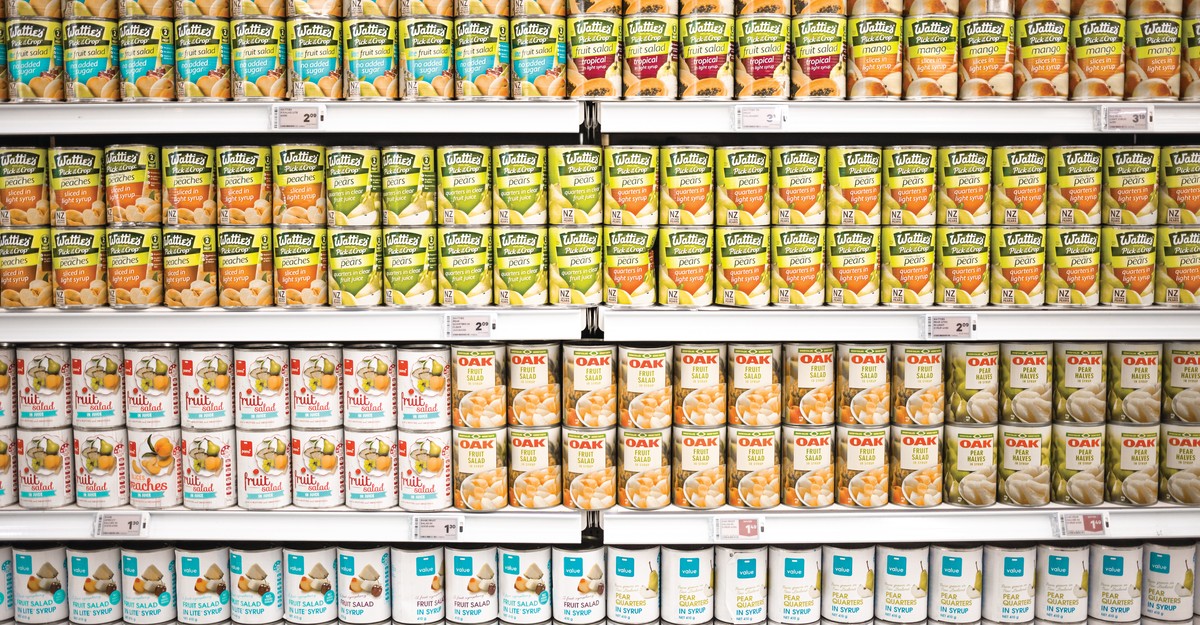
Yogurt, I ignore the date. Canned goods, kind of annoying that some people throw them out after they "expire." My kids are guilty of that. I told every one of our kids that canned goods don't expire and dates are new on those cans. It's just a weird thing, throwing out good food because it's supposedly expired.
 
Pop, soda, etc., starts tasting pretty bad after the expiration date.
I agree if you are talking about diet soda, but regular soda tastes fine for a long time after the expiration date, especially if it is in cans vs. plastic bottles.

Kurt
 
  • Like
Reactions: Tia
Top