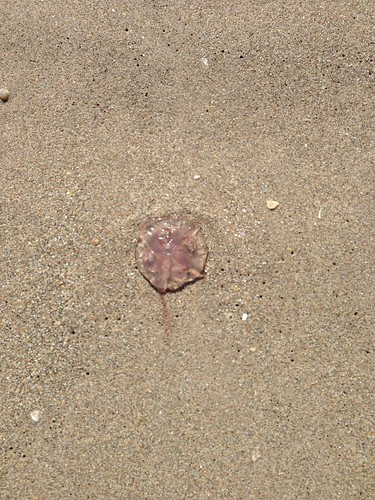
Sea Lice = Thimble Jellyfish larvae
You probably see the Moons and think they are the source, but they are just visible, but not the ones causing the problem. I have swam through Thimble Jellies and trust me, you can't really see them, but they are there. The water just looks a little bit blurry, but they are so small you just can't tell.
They get under your bathing suit and fire. It is horrible, and I had lots of welts. Live and learn....
From the Jelly fish site quoted earlier....
http://www.jellyfishfacts.net/
"The thimble jelly is also hard to detect, but actually it is the larvae of this jellyfish that causes the main problem to bathers in the Caribbean. These larvae are often refereed to as sea lice, and cause a lot of painful rash, called the "seabather's eruption" on the victim. They are very tiny and you wont know that you have been affected until the rash appears. These tiny jellyfish usually will get caught in between the swim suit and the skin of the person. The parts that get rubbed will get the most infestations, like the inner thighs, armpits, neck and so on. In mild cases antihistamines are considered helpful, and in severe cases systemic steroids are administered under medical supervision."
For first aid.... NOT pee (there are rumors) or fresh water.
"The following first aid steps must be followed until medical help arrives, for most jellyfish stings: Bathe the sting immediately with vinegar. This helps deactivate any nematocysts that get lodged under the skin. Do not rub the sting as this will make the embedded nematocysts release their venom, further aggravating the symptoms of the sting. In the absence of vinegar, sea water can also be used to clean the sting and attendant rash. Fresh water must be avoided as this can result in the embedded nematocysts releasing their venom.
Find jellyfish sting protection and relief products on Ebay (best price) or your local diving supply store. "
OK, enough of my Jelly lessons for the day.