As part of a different thread about my fall in my bathroom, I started talking about my design for a handicapped shower when my daughter's family and I moved into a house 5 years ago. I thought that giving details of what I did could be helpful to anyone who might want to change their bathroom for "aging in place".
My daughter and her family had been living with me in my house (4BR/3.5 BA, 2200 SF), but we needed more room after they had their 4th child. The house we jointly chose (their deed; I gave them downpayment and closing costs and pay all utilities) had a mostly finished walk-out lower level with several open areas and a half hath with a rough-in for a 6' long shower.
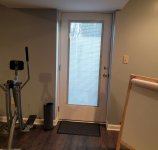
I found a home improvement contractor to wall off one of the open areas with a large walk-in closet to create a bedroom, replace a solid outside door with a full-light door with internal blinds [huge difference in natural light], and build a handicapped shower which I designed after *much* reading. He also added a second railing for all of the staircases.
The contractor widened the doorways to accommodate a walker/wheelchair, if eventually needed. The doors need to have a minimum of 32" clearance when the door is at 90 degrees. 36" is better to accommodate wider wheelchairs.
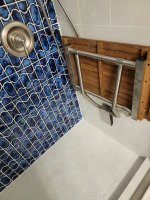
I carefully researched the type of flooring I needed for the shower to have the best grip with my feet. Because one of my legs is weak, it slips easily. The floor tile I chose is white porcelain "pebbles" with a Coefficient of Friction greater than 0.60 and therefore ADA-compliant. Plus, the pebbles are different sizes and therefore require quite a bit of grout, which I specified to be "sand grout," which improves the grip of my toes. I have always felt stable on this shower flooring.
The contractor suggested two long grab bars, one at the right entrance and one on the far wall. I added a third one next to the side I use as the shower exit. I have limited use of my left arm, so I always grip with my right. If you're planning for a possible handicap situation, it's probably wise to consider that one side or the other might be impaired.
BTW, I *do not* recommend those suction grab bars. My son-in-law put one in my old shower years ago. It gave way at one point -- very scary.
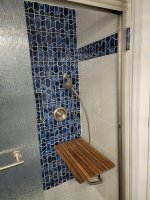
I chose a fold up teak bench that is ADA compliant, which means it has to fold up and down with less than 5 pounds of pressure -- very important to prevent a fall. The home improvement guy did have a little trouble attaching the bench to the wall in such a way that it would slide up and down easily. The company that sells the bench was very helpful when he called and the issue was resolved easily. The bench is nearly as wide as the shower, so would provide an easier transfer if I need to slide in or out of a wheelchair eventually. I also had the bench installed 3" higher than usual, which allows me to stand up without "pushing off" from the seat as I normally need to do from a chair. I had a separate shower head installed next to the bench.
It's a little thing, but I changed the toilet paper dispenser to be what they call "single arm," meaning you can just slide the roll on. There's no spring-loaded roller in the center that needs to be taken in and out. Much easier with one good hand.
Links for the bench and shower floor tile I bought:

 www.teakworks4u.com
My daughter and her family had been living with me in my house (4BR/3.5 BA, 2200 SF), but we needed more room after they had their 4th child. The house we jointly chose (their deed; I gave them downpayment and closing costs and pay all utilities) had a mostly finished walk-out lower level with several open areas and a half hath with a rough-in for a 6' long shower.
I found a home improvement contractor to wall off one of the open areas with a large walk-in closet to create a bedroom, replace a solid outside door with a full-light door with internal blinds [huge difference in natural light], and build a handicapped shower which I designed after *much* reading. He also added a second railing for all of the staircases.
The contractor widened the doorways to accommodate a walker/wheelchair, if eventually needed. The doors need to have a minimum of 32" clearance when the door is at 90 degrees. 36" is better to accommodate wider wheelchairs.
I carefully researched the type of flooring I needed for the shower to have the best grip with my feet. Because one of my legs is weak, it slips easily. The floor tile I chose is white porcelain "pebbles" with a Coefficient of Friction greater than 0.60 and therefore ADA-compliant. Plus, the pebbles are different sizes and therefore require quite a bit of grout, which I specified to be "sand grout," which improves the grip of my toes. I have always felt stable on this shower flooring.
The contractor suggested two long grab bars, one at the right entrance and one on the far wall. I added a third one next to the side I use as the shower exit. I have limited use of my left arm, so I always grip with my right. If you're planning for a possible handicap situation, it's probably wise to consider that one side or the other might be impaired.
BTW, I *do not* recommend those suction grab bars. My son-in-law put one in my old shower years ago. It gave way at one point -- very scary.
I chose a fold up teak bench that is ADA compliant, which means it has to fold up and down with less than 5 pounds of pressure -- very important to prevent a fall. The home improvement guy did have a little trouble attaching the bench to the wall in such a way that it would slide up and down easily. The company that sells the bench was very helpful when he called and the issue was resolved easily. The bench is nearly as wide as the shower, so would provide an easier transfer if I need to slide in or out of a wheelchair eventually. I also had the bench installed 3" higher than usual, which allows me to stand up without "pushing off" from the seat as I normally need to do from a chair. I had a separate shower head installed next to the bench.
It's a little thing, but I changed the toilet paper dispenser to be what they call "single arm," meaning you can just slide the roll on. There's no spring-loaded roller in the center that needs to be taken in and out. Much easier with one good hand.
Links for the bench and shower floor tile I bought:
30" Wide Teak ADA Wall Mount Shower Bench Seat
Every Teak ADA Shower Bench Seat by Teakworks4u is built on a heavy-duty ADA compliant frame with multiple battens that form a comfortable seat. Get yours now.
www.teakworks4u.com
Attachments

Last edited: