• Welcome to the FREE TUGBBS forums! The absolute best place for owners to get help and advice about their timeshares for more than 32 years!

    Join Tens of Thousands of other owners just like you here to get any and all Timeshare questions answered 24 hours a day!
  • TUG started 32 years ago in October 1993 as a group of regular Timeshare owners just like you!

    Read about our 32nd anniversary: Happy 32nd Birthday TUG!
  • TUG has a YouTube Channel to produce weekly short informative videos on popular Timeshare topics!

    All subscribers auto-entered to win all free TUG membership giveaways!

    Visit TUG on Youtube!
  • TUG has now saved timeshare owners more than $24,000,000 dollars just by finding us in time to rescind a new Timeshare purchase! A truly incredible milestone!

    Read more here: TUG saves owners more than $24 Million dollars
  • Sign up to get the TUG Newsletter for free!

    Tens of thousands of subscribing owners! A weekly recap of the best Timeshare resort reviews and the most popular topics discussed by owners!
  • Our official "end my sales presentation early" T-shirts are available again! Also come with the option for a free membership extension with purchase to offset the cost!

    All T-shirt options here!
  • A few of the most common links here on the forums for newbies and guests!

New scientific paper: offshore wind turbines alter marine eco-system, could shift ocean currents

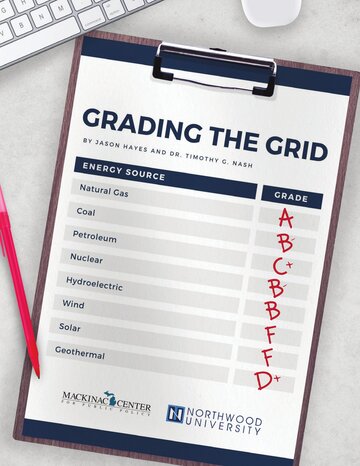
Here is an interesting scorecard for different electric power sources from the Mackinac Center for Public Policy and Northwood University called "Grading the Grid":

MCPP-NWU_Energy_Report_Card.pdf.png.jpg

This a short opinion piece with zero facts
ZERO
No cost comparisons
No evidence of any kind for their evaluations and "grades"
A PURE PUFF PIECE
The type you love to put forward as somehow meaningful
 
I have posted materials from people a lot smarter than you or I on this subject who point to the intermittency of wind and solar as the factor pushing up the rates. You may not get it, but they and a growing number of others, DO. Again, the basic principles are the same everywhere - dispatchable base load power that can be depended on versus chaotically intermittent wind and solar.

Lack of oil and gas in Europe means that choose other sources of conventional electricity. With France, it is nuclear. With Poland, it is coal. But those countries smart enough to get on with fracking are finding gas, like Hungary. Some like the UK have found it but the politicians won't let them develop it with fracking. The UK and Norway do have the large North Sea oil / gas fields. Romania also has substantial oil and gas resources.. When Finland powered up a big nuclear power plant this year, electric rates fell by 70%, and that is constant power, not on and off wind and solar.

For countries that went heavy on wind and solar, they saw their electric rates skyrocket from what they had previously been. In one of the videos, I posted, for example, it was pointed out that British electric rates tripled due to the "Net Zero" policies pushing wind and solar. No wonder the party leading by double digits in the polls calls that "Net Stupid" and one of the two parties jockeying for second place has also formally come out against Net Zero.
Here is a website with European Union Electricity Generation by Fuel Type
I will point out that oil is used in the production
In one chart, they show the projected cost of electricity in the "day ahead" market

The price fluctuates daily as it does here in the US

But looking at the average price of a Mwh (Megawatt Hour) in Euros
It is generally between 80 and 100 Euros per Mwh
This would translate to .08 euros and .10 euros a Kwh

This does not take into account the transmission costs from plant to final use place

These prices are similar but higher than the US

Especially if you compare the value of the Dollar to a Euro

 
"Blended cost of electricity" ???? You must not have been paying attention. That is what makes wind and solar cost so much, because conventional plants have to be ramped up and down to cover the voids from weather dependent wind and solar, something those conventional plants were not designed for, and which makes them much more expensive to operate than if they were running normally. Having to have extensive backup for intermittent wind and solar makes the system costs much higher. That is also explained in links and videos I have posted. Even one of Brett's useless undocumented posts mentioned cycling coal plants up and down to make up for wind and solar gaps made the coal plants wear out faster.

If the grid has to substitute expensive power from the spot market or from peaker plants when wind and solar crap out, that higher power costs raises the bills of ratepayers.

"Lobbyist"?? No, IRENA is an industry organization of the climate industrial complex.

And the loss of forest and farmland to these land intensive wind and solar operations is also a huge negative.
There are posts that show how little thinking you do on your own
This rates as one of the highest

Electrical loads have varied since the first electricity was made available to the public

At one time the load was focused on the end of the day as people turned on lights after dark
Then the load decreased as people turned off lights and went to bed
The most simplistic example

As appliances, electric heating, and Air Conditioning (the big one) developed and became more widespread
The electrical load varied in different ways

Coal plants require more care in cycling because they take more time to vary their output of steam
Coal has to be fed in or slowed down very carefully
A boiler that cools too quickly or heats up too quickly can be literally destroyed in a couple of hours
Fire Brick cracks, boiler tubes spring leaks at the header wall, etc. etc.
This is why boilers exploded in the early industrial age
It is why nobody uses coal unless it is their primary natural resource for electrical generation

But coal burning electrical generating plants are still used and they have to cycle to meet the load
Whether up or down
Solar and Wind electrical production can be used to dampen the cycling of these plants

Did your weather person tell you how windy it will be tomorrow during the evening news
Can I look at AccuWeather, weather nation, weather channel, my local station and get a good idea of wind speed and sunlight conditions for tomorrow
I can (tomorrow is projected to have 40 MPH winds with 60 MPH gusts where I am)
With this information, the utility companies can get a good idea how much electricity will be produced

Natural Gas plants generating steam are easier to cycle than coal plants

A Direct Fired Natural Gas plant uses a jet engine to spin the generator and can be cycled very quickly and with little problem
Think a jet engine on an Airbus 350

The blending of lower cost solar and wind does lower electrical costs

Despite the absolute nonsense promoted by the oil and natural gas industries
And repeated her by Carolinian

 
You said I was talking out of my posterior, and yet you do not refute anything I said about your post's lacking any meaningful information about PV panels (or even the silly little experiment of using a tiny amount of residual heat under particular conditions to create a miniscule/meaningless amount of power.) But I smeared you?

Your reference to these little silly panels is like a science report by a grade schooler. A 4th grader would have received a C for citing to something.

You said that solar panels can't generate electricity at night which absolutely not true. If you had said solar panels of the past could not generate electricity at night that would be true. Now that I explained this to you as simple as I can, do you see the difference.

Are you happy to have been refuted, lol. :)

Bill
 
The new advances in energy production coming out of Germany are a game changer. They finally built a working fusion stellarator that can contain super heated plasma to generate electricity. It's still a few years away but they claim it's working.

Bill

 
You said that solar panels can't generate electricity at night which absolutely not true. If you had said solar panels of the past could not generate electricity at night that would be true. Now that I explained this to you as simple as I can, do you see the difference.

Are you happy to have been refuted, lol. :)

Bill
You have failed to explain anything, except your lack of connection to reality. The panels you cited to are not photovoltaic panels at all, which is what everyone was discussing.

I will admit that the experimental panel you cited to can generate less electricity than a coin cell battery, under perfect conditions. You fail to be able to understand that those are not solar panels that everyone here is discussing. If you read the article you cited, they are panels that capture residual heat (not solar rays), to generate a meaningless amount of power.

All the talk, and what I was responding to, was by the Carolina guy talking about how PV panels do not generate electricity at night, with which I and every person here (other than you) agrees with. The fact that you think these heat capture panels somehow refute that solar panels cannot generate electricity at night is telling at best, and deeply disturbing at worst.

Using some hobby materials, I could probably fart and ignite it with a lighter and generate more electricity than your non heat capture panels.
 

"Wind is the United States' largest source of renewable energy, providing about 10% of the electricity generated in the nation, according to the American Clean Power Association."

"Wind is the United States' largest source of renewable energy, providing about 10% of the electricity generated in the nation, according to the American Clean Power Association."
 
Carolinian does have a point about the disposal of used windmill blades. At the moment, not good. What he ignores is that people are working on ways to alleviate the problem. The future is not static.

*****************

Windmill blade disposal is a growing challenge due to their size and composite materials (fiberglass/epoxy), leading many to landfills, but innovative recycling methods are emerging, including mechanical grinding for construction materials (roads, panels), thermal decomposition (pyrolysis) to recover fibers, and new thermoplastic blade designs that are fully recyclable, with the industry aiming for a circular economy with landfill bans in Europe by 2026.
Challenges in Disposal
  • Material Composition: Blades use thermoset resins, which are difficult to melt and reform like thermoplastics, and are mixed with fiberglass, wood, and foam.
  • Size & Logistics: Their sheer size makes transportation to recycling facilities costly and complex.
  • Lack of Infrastructure: Limited recycling facilities and market demand for recycled materials hinder sustainable options.
Current Disposal Methods
  • Landfilling: Still common, especially in the US, but consumes significant space and isn't ideal.
  • Repurposing: Used as construction materials (e.g., bridging, shelter roofing, border walls), but this is limited.
Emerging Recycling & Recovery Solutions
  • Mechanical Recycling: Grinding blades into fine particles to create new products like concrete additives, building panels, or asphalt.
  • Chemical Recycling (Pyrolysis): High-heat processes (like Carbon Rivers' method) to break down composites and recover valuable fibers for new products, including automotive parts.
  • Catalytic Depolymerization: New research uses catalysts to break down epoxy resins, recovering the resin (BPA) and glass fibers for reuse.
Future & Sustainable Solutions
  • Thermoplastic Blades: The ZEBRA project and others are developing fully recyclable blades using thermoplastic resins, enabling easy disassembly and reuse.
  • Circular Economy Initiatives: Companies like Iberdrola and Ørsted are investing in recycling plants and developing new recyclable blade designs.
  • Policy & Responsibility: Extended Producer Responsibility (EPR) and government incentives aim to shift the burden to manufacturers for end-of-life management, with Europe aiming for a landfill ban by 2026.
Key Players
 
This a short opinion piece with zero facts
ZERO
No cost comparisons
No evidence of any kind for their evaluations and "grades"
A PURE PUFF PIECE
The type you love to put forward as somehow meaningful

You clearly failed to click on the link to read the 109 page report. Sooo typical of your superficial responses.

MCPP-NWU_Energy_Report_Card.pdf.png.jpg
 
Last edited:

"Wind is the United States' largest source of renewable energy, providing about 10% of the electricity generated in the nation, according to the American Clean Power Association."

"Wind is the United States' largest source of renewable energy, providing about 10% of the electricity generated in the nation, according to the American Clean Power Association."

Not surprising they went judge shopping to the ultra partisan Massachusetts federal district court, whose partisan rulings usually get overturned when they reach the adults in the room in the appellate courts. A lot of judge shopping seems to get done there because the roster of judges in that district is utterly one-sided.
 
There are posts that show how little thinking you do on your own
This rates as one of the highest

Electrical loads have varied since the first electricity was made available to the public

At one time the load was focused on the end of the day as people turned on lights after dark
Then the load decreased as people turned off lights and went to bed
The most simplistic example

As appliances, electric heating, and Air Conditioning (the big one) developed and became more widespread
The electrical load varied in different ways

Coal plants require more care in cycling because they take more time to vary their output of steam
Coal has to be fed in or slowed down very carefully
A boiler that cools too quickly or heats up too quickly can be literally destroyed in a couple of hours
Fire Brick cracks, boiler tubes spring leaks at the header wall, etc. etc.
This is why boilers exploded in the early industrial age
It is why nobody uses coal unless it is their primary natural resource for electrical generation

But coal burning electrical generating plants are still used and they have to cycle to meet the load
Whether up or down
Solar and Wind electrical production can be used to dampen the cycling of these plants

Did your weather person tell you how windy it will be tomorrow during the evening news
Can I look at AccuWeather, weather nation, weather channel, my local station and get a good idea of wind speed and sunlight conditions for tomorrow
I can (tomorrow is projected to have 40 MPH winds with 60 MPH gusts where I am)
With this information, the utility companies can get a good idea how much electricity will be produced

Natural Gas plants generating steam are easier to cycle than coal plants

A Direct Fired Natural Gas plant uses a jet engine to spin the generator and can be cycled very quickly and with little problem
Think a jet engine on an Airbus 350

The blending of lower cost solar and wind does lower electrical costs

Despite the absolute nonsense promoted by the oil and natural gas industries
And repeated her by Carolinian

Are you trying to display how little you understand about electric generation?

I have repeatedly pointed out that cycling conventional power plants up and down is inefficient and costly and drives up the cost, and also that gas plants are the least difficult to cycle up and down, with coal much more difficult, and nuclear the worst of all to try to cycle up and down. Conventional power plants work most efficiently and least expensively when they run constantly. It is the intermittency of wind and solar that require that constant cycling and makes the overall system cost so high to use much wind and / or solar. Heck even one of Brett's undocumented posts showed "peaker" gas plant costs much higher than continuous cycle always-on gas plants.

Your line that is totally nuts is where you say "wind and solar can be used to dampen the cycling of these plants". That is totally backward. It is chaotically intermittent wind and solar that necessitates the use of gas and even coal plants as "peakers" when they were not designed for that and run much less efficiently and most expensively that way. Minor adjustment up and down for these plants has always been normal, but the wild swings with wind and solar production are not.

This need for extensive backup and for frequent inefficient cycling is the system cost that makes electricity so expensive in wind and solar obsessed countries like Germany, and will do the same here. In fact, it already is in states like New Jersey and Maryland.
 
Are you trying to display how little you understand about electric generation?

I have repeatedly pointed out that cycling conventional power plants up and down is inefficient and costly and drives up the cost, and also that gas plants are the least difficult to cycle up and down, with coal much more difficult, and nuclear the worst of all to try to cycle up and down. Conventional power plants work most efficiently and least expensively when they run constantly. It is the intermittency of wind and solar that require that constant cycling and makes the overall system cost so high to use much wind and / or solar. Heck even one of Brett's undocumented posts showed "peaker" gas plant costs much higher than continuous cycle always-on gas plants.

Your line that is totally nuts is where you say "wind and solar can be used to dampen the cycling of these plants". That is totally backward. It is chaotically intermittent wind and solar that necessitates the use of gas and even coal plants as "peakers" when they were not designed for that and run much less efficiently and most expensively that way. Minor adjustment up and down for these plants has always been normal, but the wild swings with wind and solar production are not.

This need for extensive backup and for frequent inefficient cycling is the system cost that makes electricity so expensive in wind and solar obsessed countries like Germany, and will do the same here. In fact, it already is in states like New Jersey and Maryland.
I guess your reality is different than mine

In your world electrical generation was always running at full speed and never cycled up or down during a 24 hour period
There was never a peak load part of the day
There were never hours of low electrical demand

I am sure you have worked around steam, boilers, electrical generation for some part of your life
 
Another undocumented post from Brett. Imagine that! I wish he would learn how links work. It's not that difficult.

Here is one that does have a link and explains the ridiculousness of the claims asserted in big letters with no backup by Brett:

 
Another undocumented post from Brett. Imagine that! I wish he would learn how links work. It's not that difficult.

Here is one that does have a link and explains the ridiculousness of the claims asserted in big letters with no backup by Brett:

how many times have you shown this one
5
 
I guess your reality is different than mine

In your world electrical generation was always running at full speed and never cycled up or down during a 24 hour period
There was never a peak load part of the day
There were never hours of low electrical demand

I am sure you have worked around steam, boilers, electrical generation for some part of your life

As I pointed out, conventional plants have always been set up for adjustments to output, but it is the "feast or famine" nature of wind and solar where they can crap out totally in some cases, often at times of high grid demand, and in others like spring and fall overproduce when demand is low. Wind output can vary a lot not only week by week but day by day and hour by hour. as charts I have posted show. I have presented quite a few links or videos to knowledgable people who explain why this makes an electric system inefficient and costly.
 
how many times have you shown this one
5

Three, and I will keep showing it to answer Brett's undocumented posts which have no links and no substance, just big headlines, sometimes with a picture attached.
 
Three, and I will keep showing it to answer Brett's undocumented posts which have no links and no substance, just big headlines, sometimes with a picture attached.
Here is a study from the Dept of Energy on Electrical Output Costs from Solar Panels
Also known as LCOE

Many of the arguments about wind and solar is that they are not less expensive


I am not going to give you the numbers
If you want to debate about costs
You should be able to figure out the numbers for yourself and what they mean

People want to disregard the numbers from Lazard
You believe the claim by that they are not calculated correctly

This is a bank that makes energy loans
This is a firm that acts an advisor to major corporations
This is an asset management firm with $250 Billion under management
They don't get into this position by posting "incorrect calculations"

People with no "skin in the game" so to speak make these arguments
They are in the game for clicks, reposts, and engagements

If we disagree on the costs of electricity generated
Than everything else will be a disagreement
 
Carolinian does have a point about the disposal of used windmill blades. At the moment, not good. What he ignores is that people are working on ways to alleviate the problem. The future is not static.
*****************

Windmill blade disposal is a growing challenge due to their size and composite materials (fiberglass/epoxy), leading many to landfills, but innovative recycling methods are emerging, including mechanical grinding for construction materials (roads, panels), thermal decomposition (pyrolysis) to recover fibers, and new thermoplastic blade designs that are fully recyclable, with the industry aiming for a circular economy with landfill bans in Europe by 2026.
Challenges in Disposal
  • Material Composition: Blades use thermoset resins, which are difficult to melt and reform like thermoplastics, and are mixed with fiberglass, wood, and foam.
  • Size & Logistics: Their sheer size makes transportation to recycling facilities costly and complex.
  • Lack of Infrastructure: Limited recycling facilities and market demand for recycled materials hinder sustainable options.
Current Disposal Methods
  • Landfilling: Still common, especially in the US, but consumes significant space and isn't ideal.
  • Repurposing: Used as construction materials (e.g., bridging, shelter roofing, border walls), but this is limited.
Emerging Recycling & Recovery Solutions
  • Mechanical Recycling: Grinding blades into fine particles to create new products like concrete additives, building panels, or asphalt.
  • Chemical Recycling (Pyrolysis): High-heat processes (like Carbon Rivers' method) to break down composites and recover valuable fibers for new products, including automotive parts.
  • Catalytic Depolymerization: New research uses catalysts to break down epoxy resins, recovering the resin (BPA) and glass fibers for reuse.
Future & Sustainable Solutions
  • Thermoplastic Blades: The ZEBRA project and others are developing fully recyclable blades using thermoplastic resins, enabling easy disassembly and reuse.
  • Circular Economy Initiatives: Companies like Iberdrola and Ørsted are investing in recycling plants and developing new recyclable blade designs.
  • Policy & Responsibility: Extended Producer Responsibility (EPR) and government incentives aim to shift the burden to manufacturers for end-of-life management, with Europe aiming for a landfill ban by 2026.
Key Players

The blade recycling story has a common theme when blades are left in vacant lots

Turbine farm owner subcontracts with a new company to do the recycling
New company gets paid
drags the blades to an empty lot
New company takes the money and runs
Leaves a legal and financial mess for someone else to clean up

Here in Minnesota

Here in Texas

The towns have figured out where the "deep pocket" is
Now pursuing legal action for cleanup and damages

Not a pleasant experience for the people living next door
But they should receive a payout for the problem

The industry is now aware of this avenue of fraud
Players such as GE Vernova do appear to have the fraud under control

Opponents of green energy have had a field day with continued reposts of the stories
Never an explanation
Just attacks
 
Green energy is attacked 24/7 by network of websites repeating and recycling same stories

Oil not so much

But here is an example of the mess created by abandoned oil wells and disappearing LLCs

 
Here is a study from the Dept of Energy on Electrical Output Costs from Solar Panels
Also known as LCOE

Many of the arguments about wind and solar is that they are not less expensive


I am not going to give you the numbers
If you want to debate about costs
You should be able to figure out the numbers for yourself and what they mean

People want to disregard the numbers from Lazard
You believe the claim by that they are not calculated correctly

This is a bank that makes energy loans
This is a firm that acts an advisor to major corporations
This is an asset management firm with $250 Billion under management
They don't get into this position by posting "incorrect calculations"

People with no "skin in the game" so to speak make these arguments
They are in the game for clicks, reposts, and engagements

If we disagree on the costs of electricity generated
Than everything else will be a disagreement
The same old scam. LCOE = Levelized Cost of Energy which excludes the much higher system costs of intermittent sources like wind and solar. No wonder you resent my posting articles that expose that fraud. Lazard is a bank that services the climate industrial complex and so will always promote it in their external communications. We have no idea what their internal considerations actually are.

Wind and solar bring much higher system costs which is what makes them so expensive to consumers.
 
Top